
No one meets reality with an empty mind. We notice through concepts we inherited, questions we learned to ask, habits of attention, languages, loyalties, and stories about what matters. These frameworks make understanding possible. They can also conceal what they do not prepare us to see.
Three terms help us examine this situation. A paradigm is a shared pattern of assumptions, exemplary problems, methods, and standards within a field. A worldview is a broad set of commitments about reality, knowledge, value, human nature, and the good life. A system is an arrangement of connected parts whose relationships produce patterns that cannot be understood by inspecting each part alone. The words overlap, but they direct attention at different scales.
Paradigms and what counts as a problem
Thomas Kuhn made “paradigm” famous in The Structure of Scientific Revolutions. He was not simply saying that everyone has opinions or that facts are invented. He argued that mature scientific communities ordinarily work within shared achievements that define important questions, acceptable methods, and model solutions. This “normal science” can be highly productive because researchers do not reopen every foundation each morning.
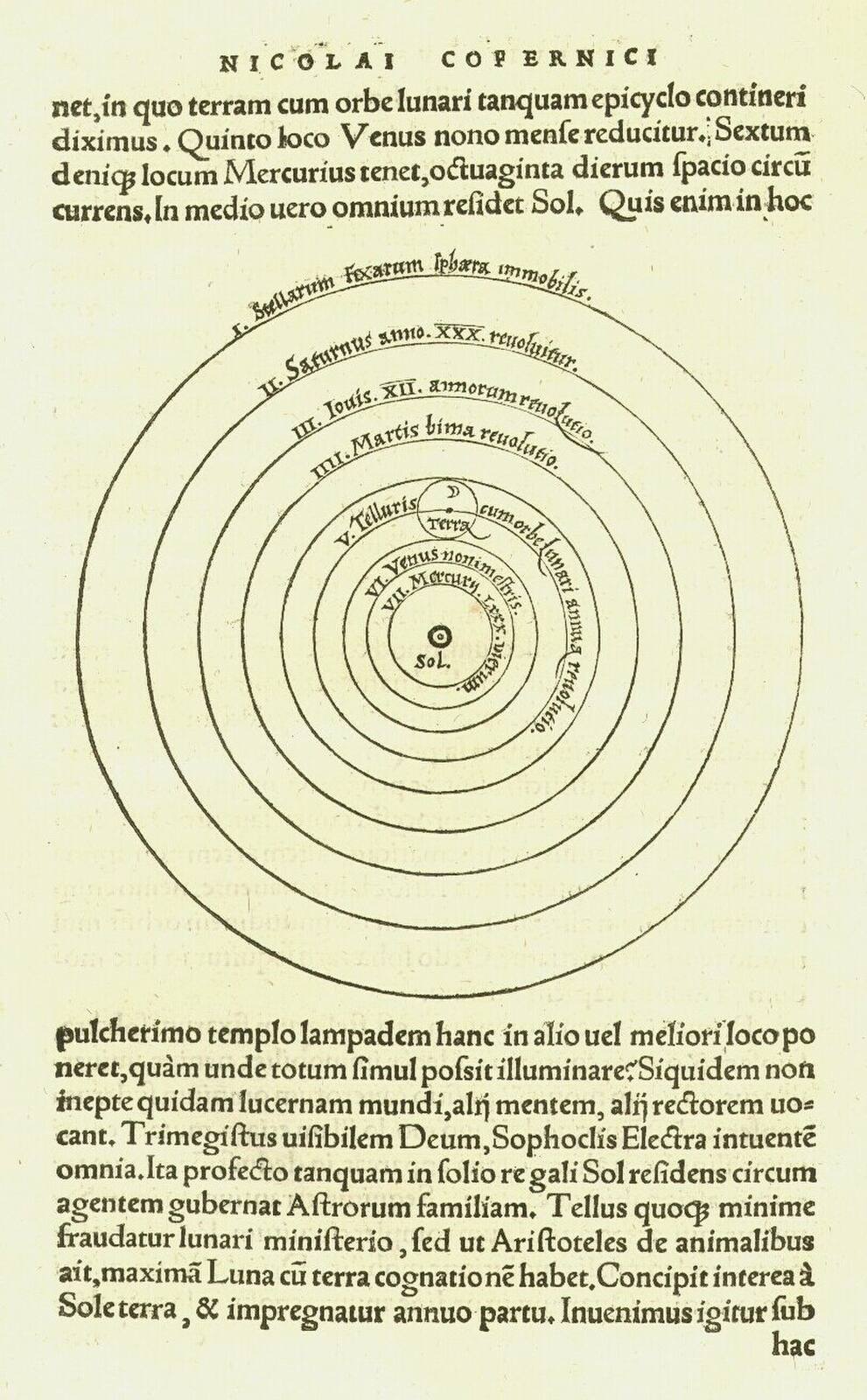
Anomalies eventually accumulate: results that resist the reigning framework. Most anomalies do not trigger revolution; researchers first try to solve them with existing tools. But in some historical episodes, crisis contributes to a new framework that reorganizes the field. The transition from Ptolemaic to Copernican astronomy is not just a new answer placed into an unchanged worksheet. The relationships among motion, observation, mathematics, and the place of Earth are reconceived.
Kuhn’s account remains debated, and the term paradigm shift is now applied far too casually. Changing your mind is not necessarily a scientific revolution. His durable insight is that inquiry depends on communities and inherited standards, and that evidence is interpreted within structured practices.
Worldviews as lived orientation
A worldview reaches beyond a scientific discipline. It includes answers—often implicit—to questions such as: What is ultimately real? What is a human person? What can be known? What makes life meaningful? What do we owe one another? A worldview is not merely a list of propositions. It is an orientation lived through trust, ritual, aspiration, and response.
Latter-day Saints may recognize commitments to an embodied God, premortal life, agency, covenant, continuing revelation, and the eternal significance of relationships. Those commitments shape how other claims are heard. But there is no single automatic “Latter-day Saint worldview” that settles every issue. Members interpret shared teachings through different cultures, political traditions, experiences, and philosophical assumptions.
Nor do nonreligious people lack worldviews. Naturalism, humanism, liberalism, nationalism, and consumerism can organize perception and value, sometimes without being named. Calling one position a worldview and another simply “the facts” is often a way of hiding the latter’s assumptions.
Systems and unexpected outcomes
Systems thinking asks us to look at relationships, feedback, delays, and incentives. A congregation, family, market, ecosystem, or media platform is not merely a pile of individuals. Its structure shapes behavior. A social-media system optimized for engagement may reward anger even if no employee explicitly wants a more angry society. A school that measures only test performance may narrow teaching even when every teacher values curiosity.
This perspective resists the temptation to explain every outcome by a hero or villain. Personal responsibility remains real, but people act inside structures they did not create. Conversely, blaming “the system” can become an excuse that erases agency. Responsible analysis moves between levels: persons shape systems, and systems shape the choices that appear available to persons.
Bias and the myth of perfect neutrality
A bias is a patterned tendency that can distort judgment. Confirmation bias leads us to seek, remember, or weight evidence that supports an existing belief. Motivated reasoning occurs when our reasoning serves a desired conclusion—protecting identity, status, belonging, or hope. Intelligence does not automatically cure these tendencies; it may give us better tools for defending what we want.
Religious and secular thinkers are equally human here. A believer may dismiss troubling evidence too quickly because belonging is at stake. A critic may interpret ambiguous evidence in the harshest possible way because a story of exposure has become central to identity. Naming symmetrical vulnerability does not imply symmetrical evidence. One side may still be better supported. It means that no one earns exemption from scrutiny by choosing the supposedly neutral team.
Perfect neutrality is not available if neutrality means having no history, commitments, or point of view. But the alternative is not “anything goes.” We can practice objectivity as a discipline rather than claim it as a personal possession. We can disclose interests, distinguish observation from inference, invite criticism, use shared methods, seek disconfirming evidence, and let people with different perspectives test our account.
Comparing frameworks responsibly
Frameworks can be compared. Ask about coherence: Do their commitments fit together, or do they generate contradictions? Ask about evidential adequacy: Do they account for the relevant facts, including inconvenient ones? Ask about scope: How much do they explain? Ask about fruitfulness: Do they generate illuminating questions and successful inquiry? Ask about simplicity, while remembering that reality is not obligated to be simple. Ask about moral cost: What does a framework train us to ignore or permit?
No single test is mechanical. A coherent fantasy remains false, and an inelegant theory may be true. Frameworks can also be adjusted to survive counterevidence, so watch for ad hoc repairs that protect a conclusion without independent support.
A practical comparison begins with self-location. Write your current view and the experiences or authorities that make it plausible. Name what evidence could count against it. Then describe a serious alternative using its advocates’ best sources. Identify what each framework explains well and where each strains. Finally, make a provisional judgment rather than pretending either total certainty or total suspension.
Humility about frameworks is not paralysis. It is the willingness to see that the lens is part of the act of seeing. We cannot step outside every perspective, but we can move among perspectives, receive correction, and judge more responsibly. The goal is not a view from nowhere. It is a view made more truthful through comparison, coherence, evidence, and charity.
Readings
- Thomas S. Kuhn, The Structure of Scientific Revolutions, chapters 2, 6, and 10.
- Stanford Encyclopedia of Philosophy, “Scientific Revolutions”.
- Internet Encyclopedia of Philosophy, “Relativism”.