
To know one language is to possess a world of expression. To learn another is to discover that the first world was not the only way reality could be divided, remembered, and addressed. Bilingualism does not automatically make a person wise, but it creates occasions for humility: familiar categories stop looking inevitable.
The practical benefits are obvious. Another language opens friendships, work, travel, worship, family history, and texts. For Latter-day Saints, whose congregations and history cross many languages, it can turn a global church from an abstraction into relationships. But the intellectual benefit reaches further. Language learning teaches that understanding is mediated, translation is interpretive, and meaning lives partly in patterns no single word can carry.
Does language shape thought?
The strongest form of linguistic determinism—the idea that a language imprisons its speakers in a fixed conceptual world—is not credible. People invent terms, learn new concepts, translate, and change their minds. A person without a single word for a distinction can still learn to make it.
Yet the opposite extreme is also implausible. Languages make certain distinctions habitual. Grammar and vocabulary can direct attention to time, number, social relationship, agency, or source of information. Research associated with linguistic relativity asks whether these habits influence memory, categorization, and perception. Findings vary by domain, and popular accounts often exaggerate them. The cautious conclusion is valuable: language can guide attention without determining destiny.
Consider kinship terms. English uncle leaves unstated whether the person is related through one’s mother or father, by blood or marriage. Other languages encode such differences routinely. English speakers can understand them, but must pause to ask. A language can make a distinction cognitively cheap and socially salient.
Scripture supplies another example. The Hebrew hesed gathers meanings of loyalty, mercy, kindness, and covenant faithfulness. No single English word carries every association in every passage. Learning the term does not reveal a secret code; it makes the reader more alert to the decisions a translation must make.
Translation is interpretation
A translator chooses among goods that do not perfectly coincide: literal wording, natural expression, rhythm, ambiguity, historical register, and cultural association. Preserving one can weaken another. This is why responsible translations differ and why comparing them can be illuminating.
Reading in an original language does not eliminate interpretation. Native and learned readers still disagree. They bring assumptions to grammar, genre, and context. Language knowledge gives access to more evidence; it does not grant infallibility.
This matters in religious life. A sermon may build a large claim on one English word when the underlying text permits several renderings. Conversely, a novice may invoke Greek or Hebrew to overrule competent translators after looking up a dictionary entry. Intellectual honesty avoids both errors. Consult multiple translations, learn enough grammar to know your limits, and use scholarly tools produced by people with deeper expertise.
Becoming intellectually bilingual
Literal bilingualism suggests a second practice: learning to translate between intellectual communities. A historian, theologian, scientist, and ordinary church member may use words such as evidence, theory, myth, or knowledge differently. Arguments fail when one community hears its own meaning in another’s term.
To become intellectually bilingual is to explain a claim inside more than one vocabulary. What concern does a doctrinal phrase address? How would a historian restate the claim as a question about sources and development? How would a believer describe the limits of the historian’s method without accusing the historian of hostility? Translation does not require pretending that the frameworks agree. It makes the disagreement accurate.
This skill is especially important for people who inhabit religious and academic worlds. One temptation is compartmentalization: speaking testimony in one room and criticism in another, never allowing either to question the other. Another is colonization: forcing every question into one community’s standards. Bilingual thought seeks a more demanding integration. It lets each language articulate what it knows best and then asks where genuine tensions remain.
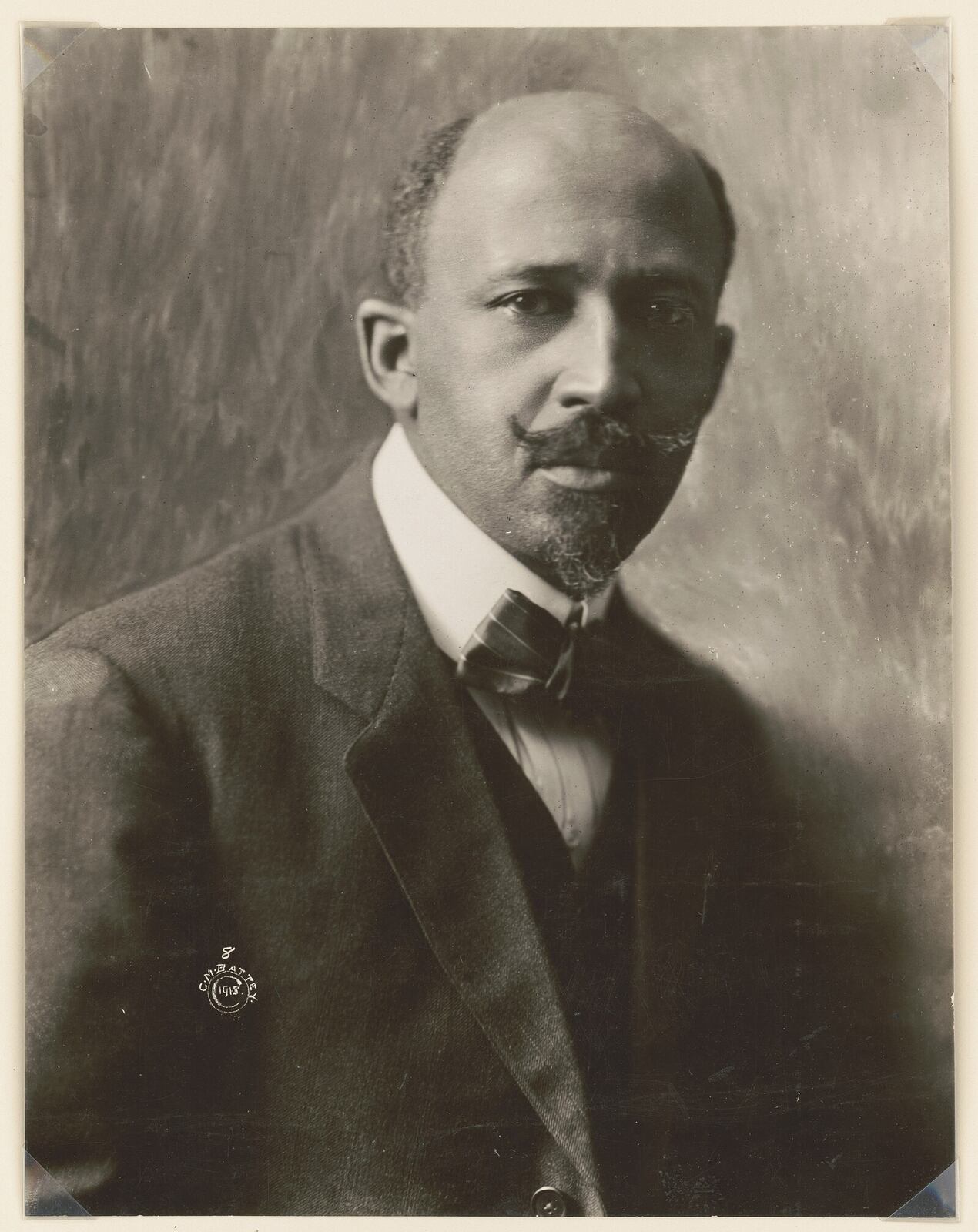
W. E. B. Du Bois’s account of “double-consciousness” in The Souls of Black Folk concerns the painful experience of seeing oneself through a racist society while also possessing one’s own self-understanding. It should not be reduced to a cheerful metaphor for language study. Yet it powerfully shows that inhabiting more than one social perspective can yield insight while also imposing costs. Not every form of doubleness is chosen, and translation can be exhausting for people continually required to explain themselves to a dominant culture.
Charity therefore includes sharing the labor. Learn how people name themselves. Do not require every unfamiliar person to become your introductory textbook. Seek works created within a community, and notice which voices translation has historically ignored.
A realistic path to another language
Choose a language connected to a reason strong enough to survive novelty: speaking with family, reading scripture or literature, serving neighbors, or participating in a community. Set a concrete horizon, such as reading a short book with help or holding a fifteen-minute conversation.
Use frequent comprehensible input—speech and text difficult enough to stretch you but understandable enough to follow. Retrieve vocabulary rather than merely rereading it. Learn common words in sentences. Speak early with patient partners and welcome correction. Study grammar as a map of patterns you are encountering, not as a gate that must be mastered before use.
Apps can support repetition, but they are not a whole language life. Listen to people, read real texts, write messages, and learn cultural conventions. Progress will be uneven. A period of feeling less articulate is part of the moral education: you experience dependence, error, and the generosity of listeners.
Even modest proficiency can transform reading. You begin to see what a translation preserves, what it loses, and how often certainty rested on an unnoticed choice. More broadly, you learn to ask of every disagreement: Are we denying the same claim, or speaking different conceptual languages? What would faithful translation require?
Being bilingual is not merely possessing two codes. It is practicing the passage between worlds without pretending that the passage is effortless. That practice enlarges access, disciplines confidence, and makes conversation possible where slogans once stood.
Readings
- Stanford Encyclopedia of Philosophy, “Whorfianism”, a supplement to its entry on the philosophy of linguistics.
- W. E. B. Du Bois, The Souls of Black Folk, chapter 1 (Project Gutenberg).
- Walter Benjamin, “The Task of the Translator.”