
Ask why education matters and the quickest answer is often economic: learn so that you can qualify for a good job. That answer is not contemptible. Work can be dignified, skill is valuable, and providing for oneself and one’s family is a serious responsibility. But career preparation is too small to carry the whole meaning of education. A human being is more than an employee. We are also neighbors, citizens, friends, parents and children, worshippers, creators, and moral agents. We must decide what deserves our loyalty, how to respond to suffering, what to do with power, and which stories about the world are true. No salary can answer those questions for us.
Learning begins in wonder: the recognition that reality is larger than our present understanding. A child asks why the moon changes shape. A reader notices that two historians tell the same event differently. A disciple encounters a scriptural passage that does not fit an easy interpretation. Wonder interrupts the illusion that we already possess the world. It makes inquiry possible.
Yet curiosity by itself is not enough. The internet can satisfy curiosity for seconds at a time while leaving a person intellectually unchanged. We can accumulate facts, clips, quotations, and opinions without learning how they belong together. Information answers a question; education forms the person who asks, evaluates, and lives with the answer. It trains attention, memory, judgment, and desire.
Learning to see
Much of ignorance is not an empty space in the mind. It is a failure to notice. A musician hears structure where an untrained listener hears only sound. A historian sees institutions, incentives, and inherited conflicts behind an event that appears sudden. A careful reader hears an author’s qualifications instead of extracting a slogan. Education enlarges the field of what can become visible to us.
This is one reason the humanities matter. Philosophy gives names to questions we were already living: What can I know? What makes an action just? What is a person? History reveals that our assumptions have origins and alternatives. Literature lets us inhabit minds and circumstances that are not our own. Theology asks how every part of life appears in relation to God. These disciplines do not merely fill shelves in the mind. At their best, they correct our sight.
The correction can be uncomfortable. Real learning sometimes discloses that a cherished argument is weak, that our community has a more complicated past than we imagined, or that someone we dismissed has understood something we missed. An education that never unsettles us may simply be furnishing our prejudices. But disruption is not the goal either. Mature learning does not prize doubt because it is fashionable, or certainty because it feels safe. It seeks warranted judgment: confidence proportioned to the quality of the evidence and the limits of our understanding.
Learning as freedom
Education also increases freedom. No one gets free of every influence; what learning offers instead is the ability to recognize an influence and respond to it deliberately. If we cannot identify an argument, we are more easily manipulated by one. If we do not know history, whatever is familiar can masquerade as inevitable. If we have only the vocabulary of our own group, disagreement can look like stupidity or wickedness.
Plato’s allegory of the cave in The Republic pictures education as a difficult turning of the whole person toward greater reality. The image should make us cautious: people who think they have left the cave can become proud of their enlightenment. Still, Plato sees something important. Learning is not simply adding objects to our field of vision; it is learning to face in a better direction.
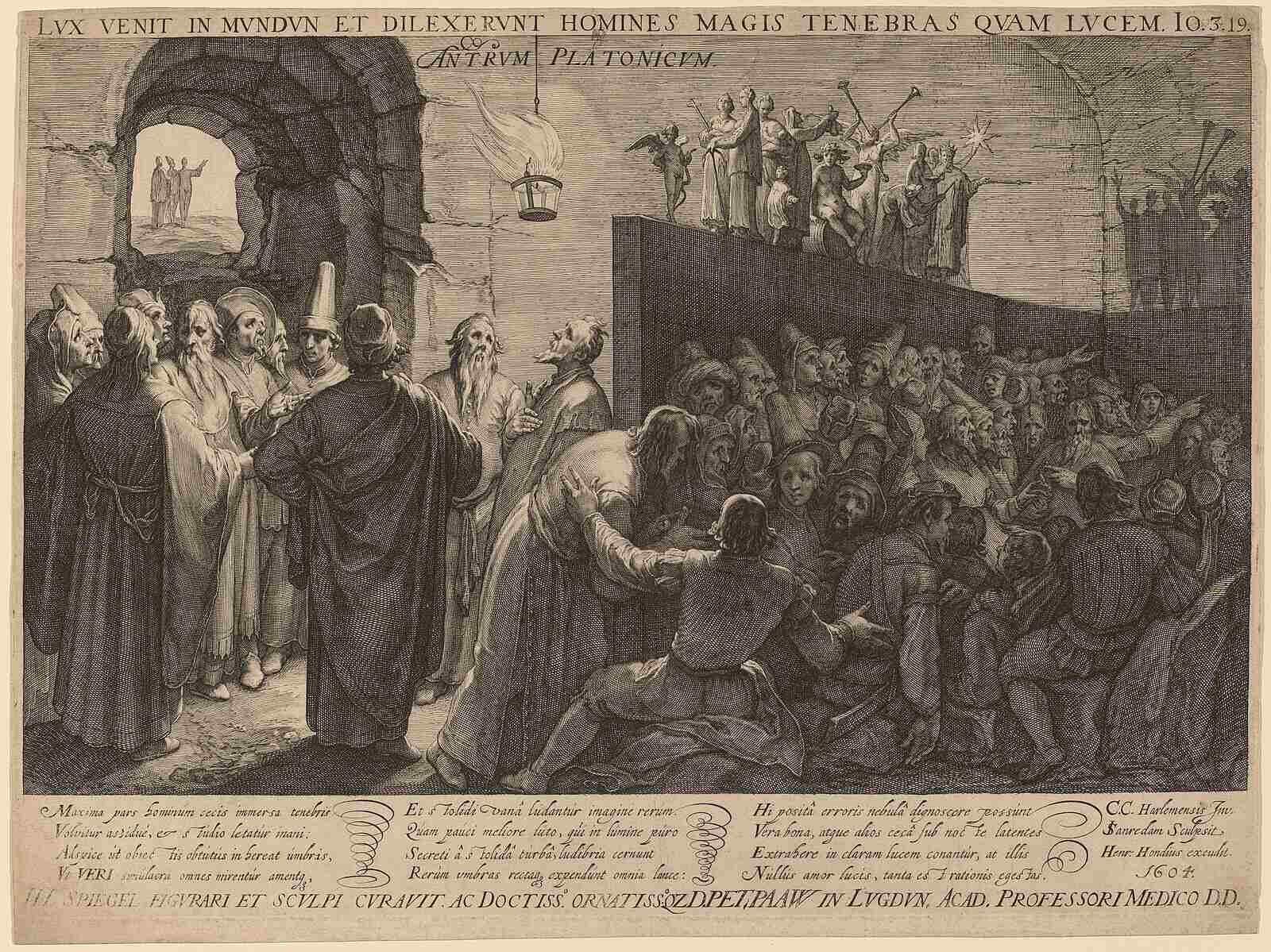
For Latter-day Saints, that account can resonate with a scriptural command to seek wisdom “by study and also by faith.” Study and faith need not name rival territories. Both can require patience, trust, experiment, repentance, and willingness to receive truth from beyond our current possession. Faith is not a license for carelessness, and scholarship is not a guarantee of wisdom. Each can become distorted by vanity. Together they can discipline a learner to take both evidence and moral responsibility seriously.
Learning as formation and service
Aristotle begins the Nicomachean Ethics by observing that actions aim at goods, then asks what the highest human good might be. His particular answers remain debated, but the shape of his question matters: education concerns what kind of life is worth building. Every course of study quietly proposes an answer. If learning is pursued chiefly for status, it trains comparison. If it is pursued only to win arguments, it trains aggression. If it is pursued to understand and serve, it can train generosity.
This does not mean every reading session needs an obvious practical payoff. Seemingly “useless” knowledge may enlarge the soul precisely because it is not consumed as a tool. Learning a dead language, tracing an old controversy, or understanding a work of art may cultivate patience and delight. Those qualities later become useful in ways no planner could predict. More importantly, they are goods in themselves.
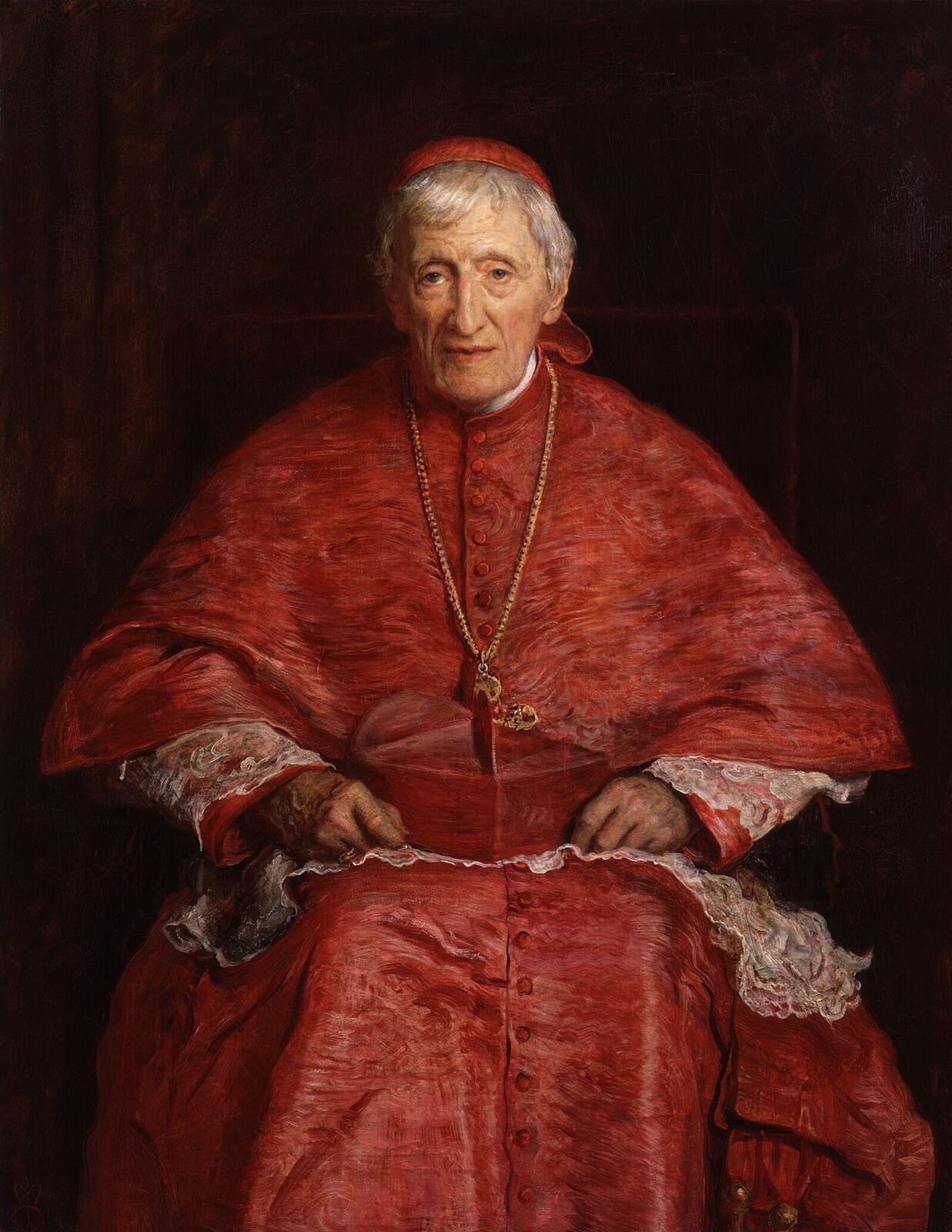
John Henry Newman, in The Idea of a University, defended liberal education as the cultivation of an intellect able to see relationships, discriminate among claims, and resist narrowness. We need not accept every feature of his nineteenth-century university to value that aim. A well-formed mind does not know everything. It knows how to approach what it does not know—how to define a question, locate trustworthy guides, detect an assumption, and revise a conclusion.
Learning is therefore also an education of desire. What we repeatedly attend to becomes easier to love. A person trained only by outrage learns to crave outrage; a person who spends patient time with demanding truth acquires a taste for precision, complexity, and beauty. Intellectual formation asks not only what a person believes, but what kind of believer they are becoming.
Roberts Academy begins here because every later subject depends on the answer. The goal is not to manufacture experts with final answers, but to form responsible beginners: people awake to wonder, equipped to inquire, honest about limits, and willing to make knowledge a gift. Reality can correct someone who studies it. Freedom grows in a mind that knows how it is being shaped. And faith need not fear a serious question, if it has learned to sit with one long enough to see where it leads.
Readings
- Plato, Republic, Book VII, especially the allegory of the cave (Project Gutenberg).
- Aristotle, Nicomachean Ethics, Book I (Project Gutenberg).
- John Henry Newman, The Idea of a University, Discourse V, “Knowledge Its Own End.”